

How Are Old Computers, TVs and Small Appliances Recycled
Discarded computers, televisions, rice cookers, fans, and other small electrical appliances contain recoverable metals, plastics, cables, and electronic components. A WEEE recycling facility processes suitable appliances through a combination of pre-treatment, shredding and material separation. The objective is to recover reusable material fractions while ensuring that batteries, hazardous components and complex electronic parts receive appropriate handling.
Before mechanical processing, incoming equipment is inspected and sorted according to its type and condition. Batteries, toner cartridges and other components requiring separate treatment must be removed where applicable. Computers and televisions may also contain circuit boards, cables and display components that are better recovered through dedicated dismantling or downstream recycling processes. Older display technologies may require additional precautions because some contain hazardous substances.
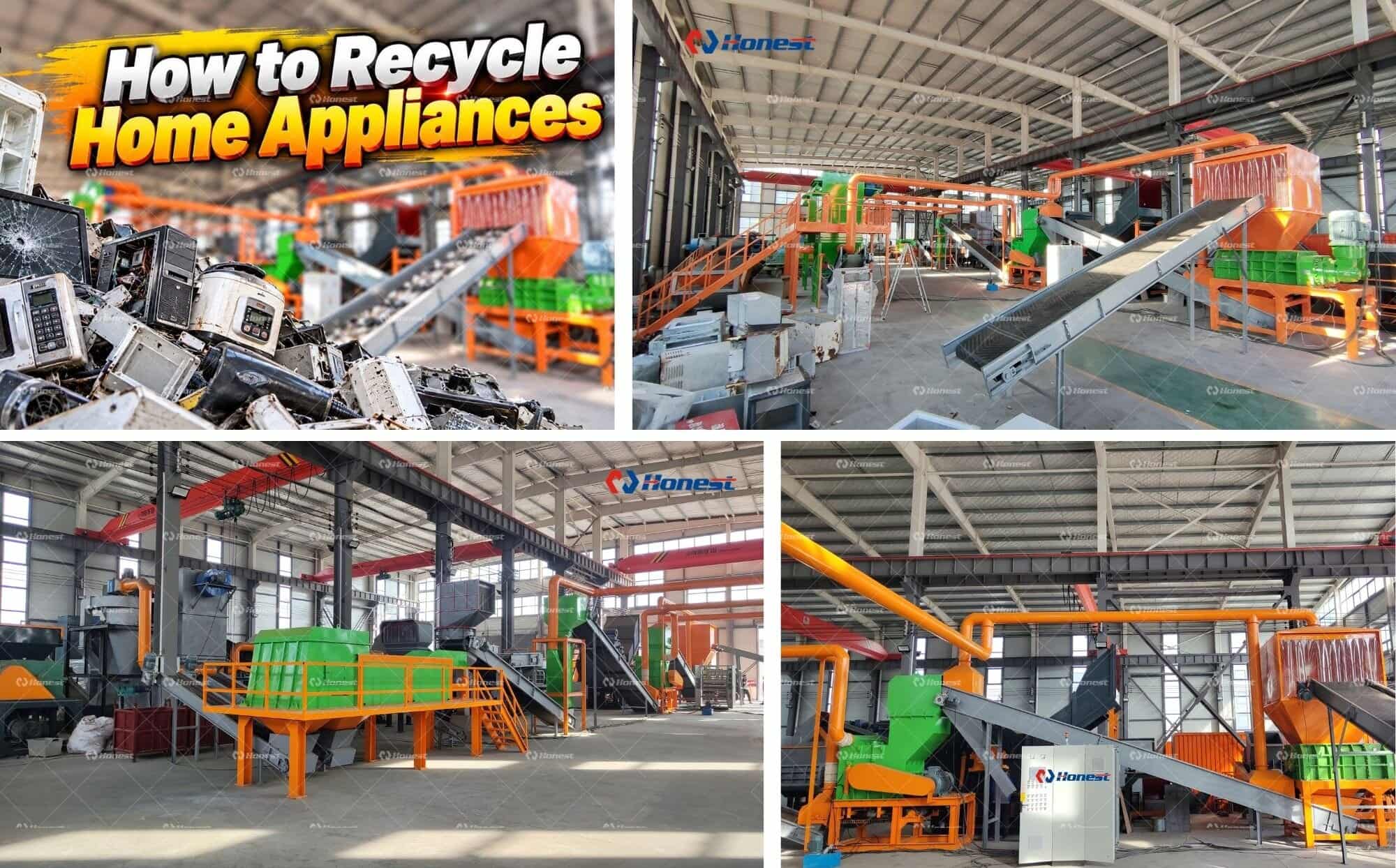 WEEE Small Appliances Recycling Plant
After pre-treatment, suitable appliances enter a shredder that reduces their size and helps release different material fractions. A secondary crusher may be added when finer size reduction or improved material liberation is required. The shredded mixture then passes through a series of separation stages. Magnetic separators recover ferrous metals such as iron and steel, while eddy current separators extract non-ferrous metals, particularly aluminum and suitable copper-bearing fractions. Screening and air separation help classify the remaining materials by particle size and physical characteristics.
The output of a typical WEEE recycling line includes ferrous metals, non-ferrous metals, and mixed plastics. However, circuit boards, copper-rich cables and selected electronic components may require separate processing to improve their recovery value. The final material quality depends on the feedstock, shredding settings, particle-size distribution, and separation configuration. Dust extraction should also be integrated into the system to control airborne particles during crushing and conveying.
A suitable e-waste recycling plant should be configured around the specific appliances being processed rather than assuming that all electrical waste can follow one identical route. A line designed for small household appliances may differ significantly from one handling computers, televisions, or mixed WEEE. Before choosing equipment, operators should assess the incoming material mix, required throughput, pre-treatment labor, target metal purity, plastic sorting requirements, and space available for installation. These factors determine whether a basic shredding and separation line is sufficient or whether additional dismantling and specialized recovery equipment is needed.
👉 Contact Tel: +86 199 0388 6476
👉 Contact Email: hnhonest.zack@gmail.com
Related News
- How Are Old Computers, TVs and Small Appliances Recycled
- How Are Old Refrigerators Recycled? Process and Equipment
- Mechanical PV Recycling Equipment for Damaged Solar Panels
- ACP Stripping Machine for Aluminum Composite Panel Recycling
- How Windshield Recycling Machines Separate Glass and PVB
- Solar Panel Frame Removal Machine for PV Recycling

Have this news-related demand?
We can help you!
Get in Touch
Connect with us anytime! Whether you have questions, need project assistance, or seek general help, our dedicated team is ready to assist. Fill out the form, and we'll promptly prioritize your satisfaction. We eagerly anticipate serving you.
If you have any requirement or suggestion, please fill in the form and send to us, thanks!
Email: hnhonest.zack@gmail.com
WhatsApp: +86 19903886476
Address: No. 403, South Of Floor 4, No. 172, Fifth Street, Zhengzhou Economic And Technological Development Zone Zhengzhou Henan China
HONEST - Experts in Waste Recycling Solutions
40000
m²
Equipment R&D Factory
2500+
Cases
Customers Worldwide
150+
Countries
Over 20 years manufacturing and 14 years export


