

Solar Panel Recycling Guide Single-Glass and Double-Glass Tech
As global installations of photovoltaic systems continue to grow, end-of-life solar panel recycling is rapidly becoming one of the most promising sectors in the recycling industry. What was once considered future waste is now turning into a valuable resource stream containing aluminum, glass, silicon, copper, and silver. For recyclers and investors evaluating new opportunities, understanding the differences between panel structures and recycling methods is essential. Today, most recycling projects focus on single-glass and double-glass photovoltaic panels, each requiring slightly different processing strategies.
The Two Main Types of Waste Solar Panels In solar panel recycling operations, most incoming waste modules fall into two structural types: single-glass panels and double-glass panels. Although both contain recoverable materials such as aluminum, glass, silicon, and copper, their structural differences directly affect recycling difficulty, equipment selection, and processing cost.
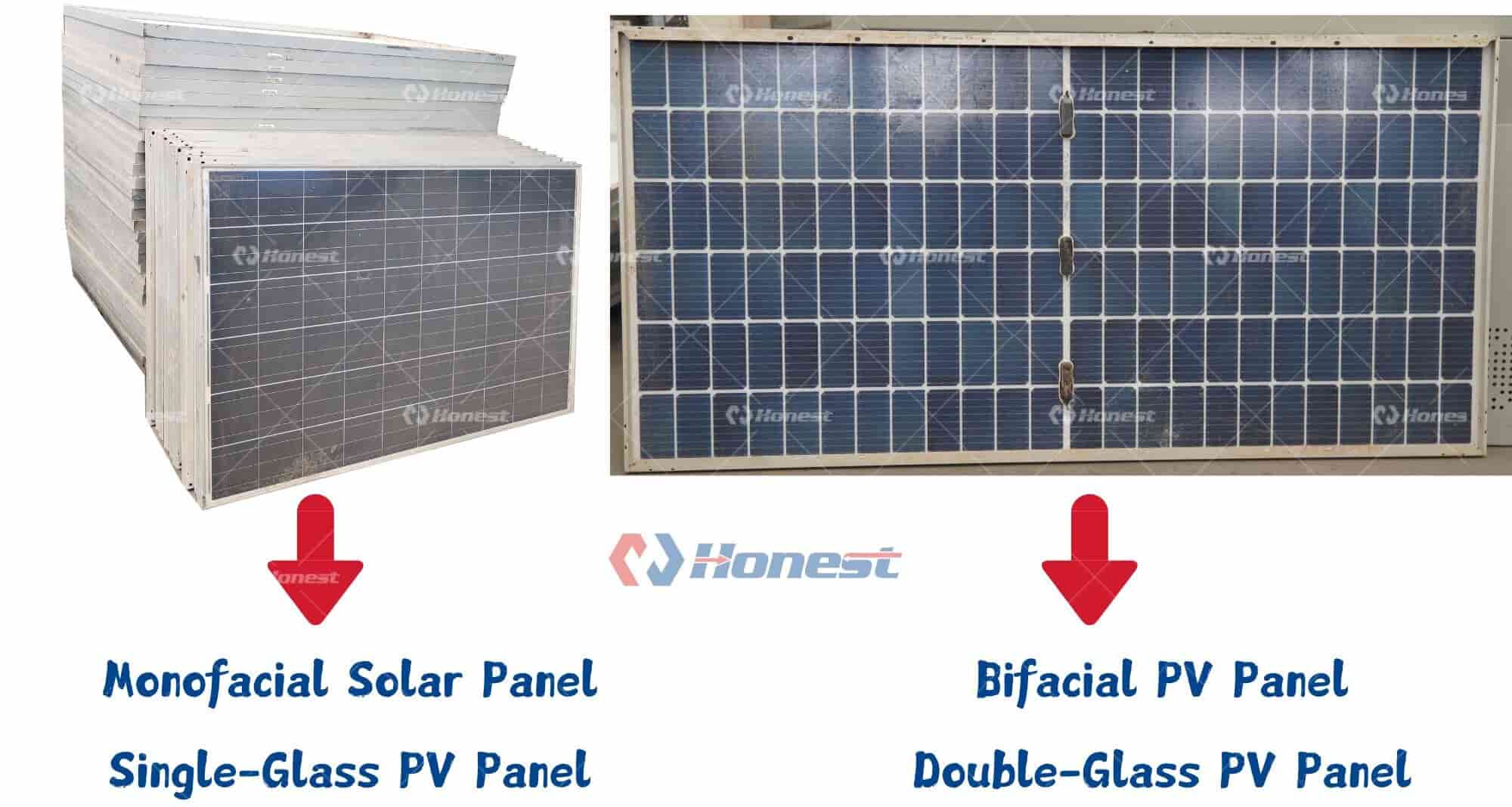
Single-glass panels were widely used in earlier photovoltaic installations and remain a major source of current recycling feedstock. Their structure typically includes front tempered glass, EVA film, solar cells, a polymer backsheet, and an aluminum frame. With only one glass layer, these panels have lower bonding strength and can usually be processed efficiently through standard mechanical crushing and separation. As a result, they are generally easier to recycle and require less processing energy. Double-glass panels, now increasingly used in newer solar farms, replace the polymer backsheet with a second layer of tempered glass. This glass-on-glass structure provides better durability but significantly increases structural strength. For recyclers, this means higher resistance during crushing and more demanding separation stages, often requiring reinforced mechanical systems or thermal-assisted treatment.
Two Core Recycling Technologies Used Today To handle different photovoltaic structures efficiently, most recycling projects rely on two core technical routes: pure mechanical recycling and mechanical–thermal treatment recycling. The choice between them depends mainly on panel structure, feedstock mix, and required processing efficiency. Pure mechanical recycling remains the most widely adopted solution due to its stable operation and relatively low operating cost. In practice, mechanical systems are usually configured according to panel type.
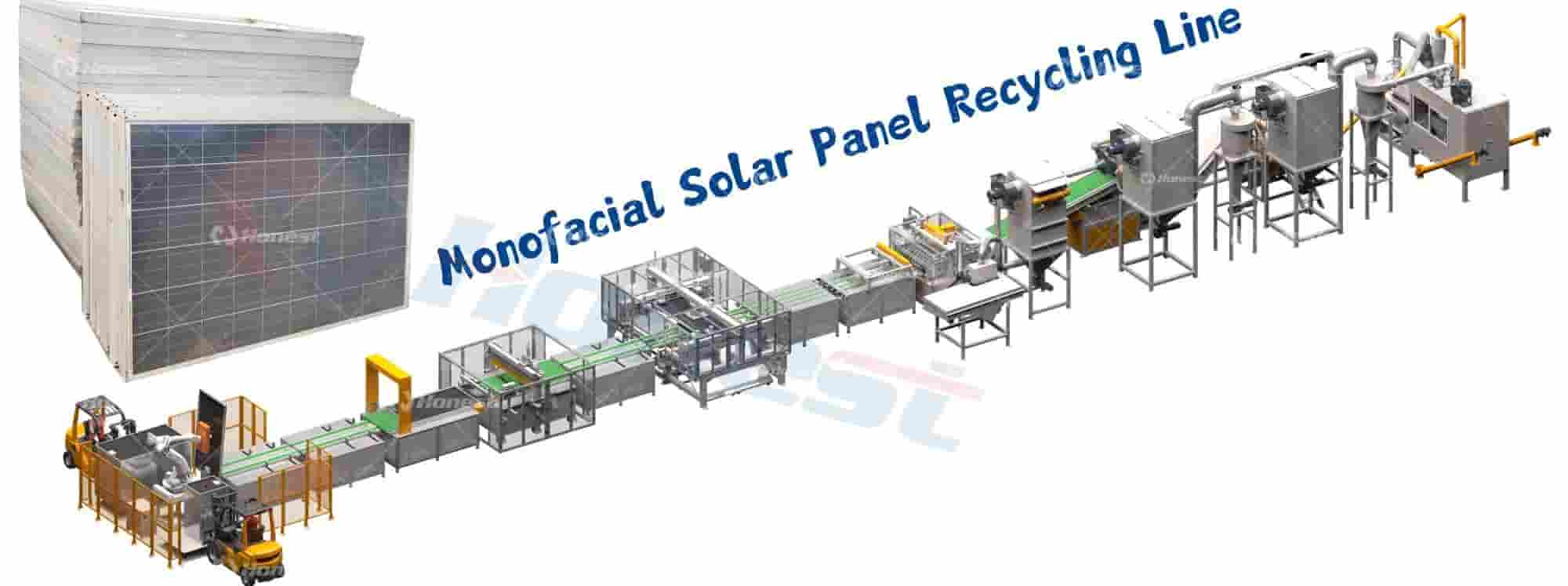 Single-Glass Solar Panel Recycling Equipment
For single-glass photovoltaic panels, dedicated mechanical recycling lines focus on standard dismantling and separation steps such as aluminum frame removal, junction box separation, crushing, and material sorting. Because single-glass panels contain only one glass layer and weaker bonding strength, these systems typically achieve high throughput efficiency, stable material flow, and lower overall energy consumption. This configuration is widely used in facilities processing large volumes of early-generation photovoltaic modules.
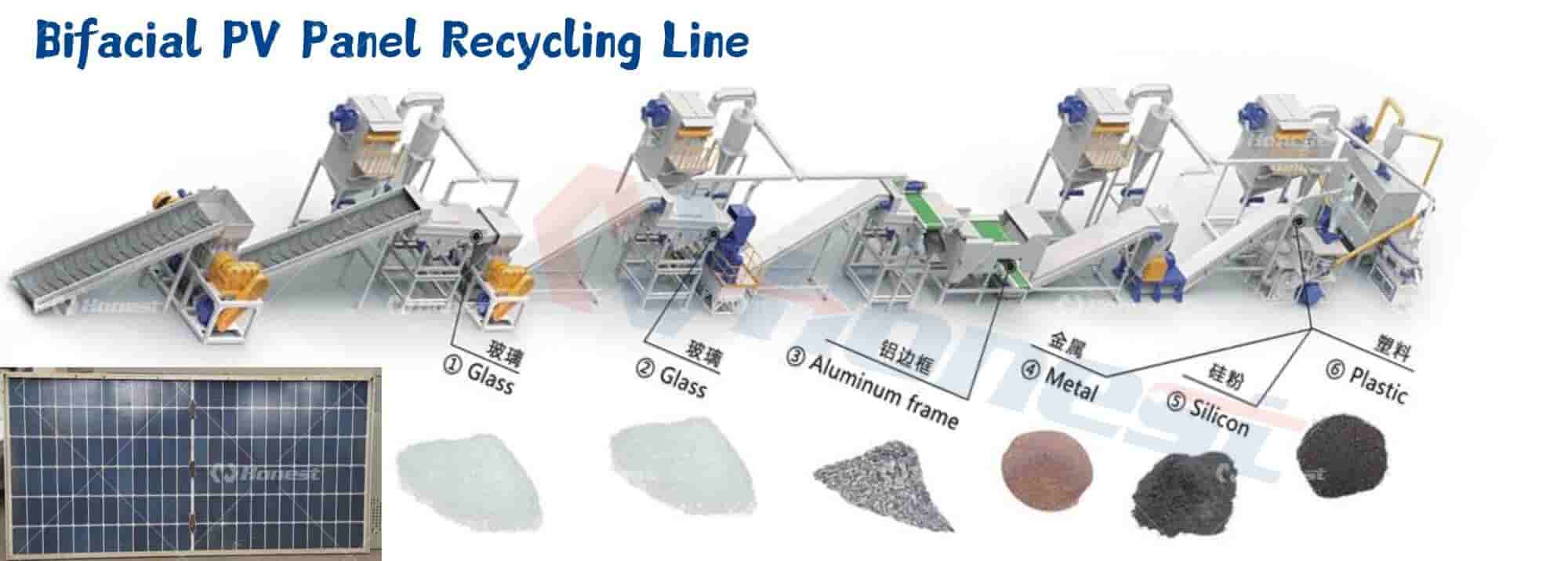 Double-Glass Solar Panel Recycling Equipment
For double-glass photovoltaic panels, stronger laminated structures require more robust mechanical processing. Double-glass recycling systems usually incorporate reinforced crushing units and multi-stage separation sections to overcome higher structural resistance. Compared with single-glass systems, they demand greater mechanical force and more durable components, but can still achieve effective material recovery without thermal treatment under controlled conditions.
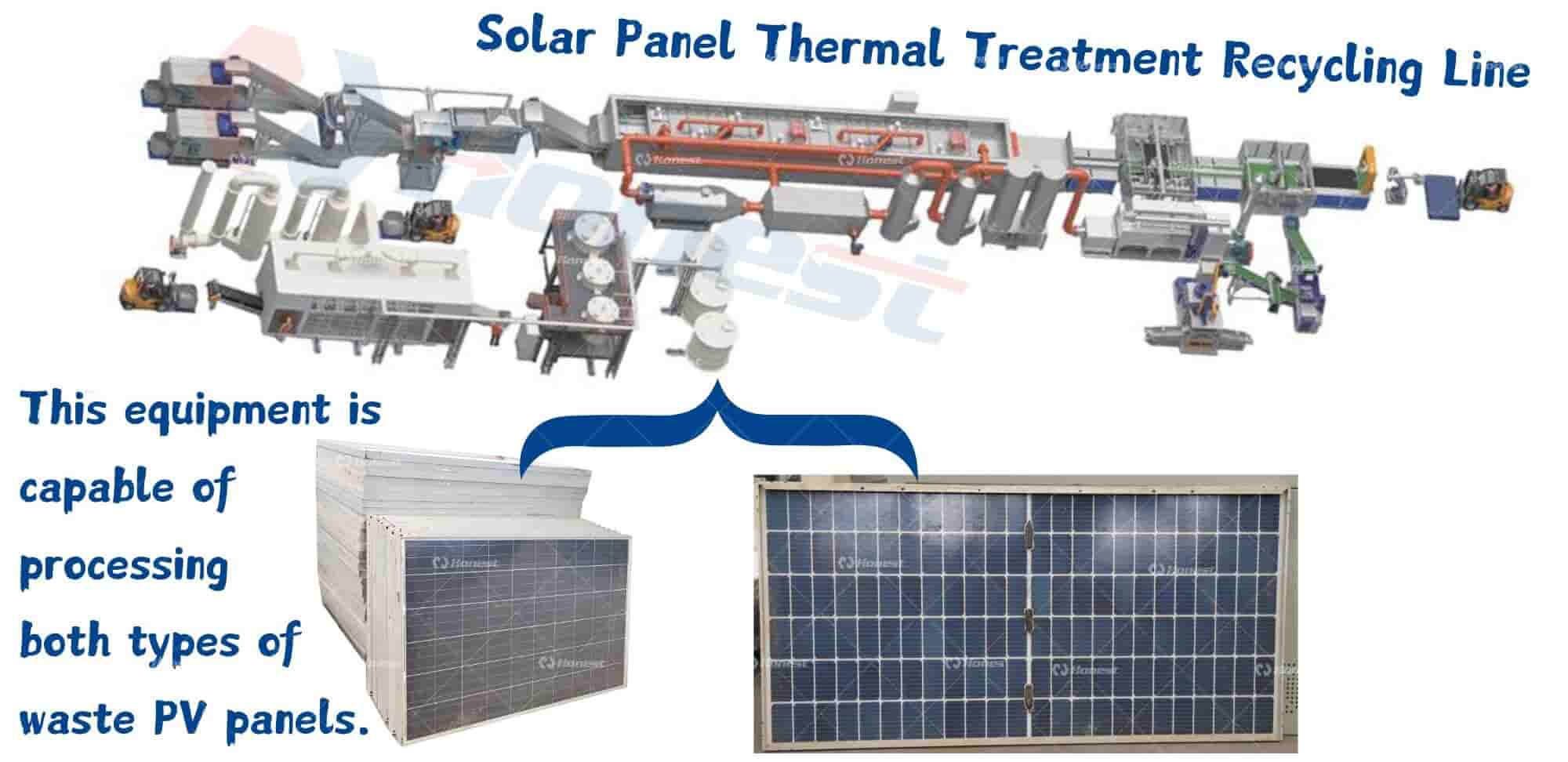 Solar Panel Thermal Treatment Recycling Equipment
In contrast to purely mechanical methods, mechanical–thermal treatment systems are designed to handle more complex or mixed photovoltaic waste streams. Solar Panel Thermal Treatment Recycling Equipment. These systems introduce a thermal delamination stage, where controlled heating softens or decomposes encapsulation materials such as EVA. Once bonding strength is reduced, downstream mechanical separation becomes significantly more efficient. Mechanical–thermal recycling systems are particularly suitable for facilities handling mixed single-glass and double-glass panels, as well as operations requiring higher separation efficiency and improved material purity. Due to their flexibility and feedstock adaptability, they are increasingly selected for large-scale and centralized photovoltaic recycling plants.
Selecting the right solar panel recycling system ultimately depends on matching technology to panel structure, processing scale, and long-term waste trends, rather than relying on a one-size-fits-all solution. Facilities handling mostly single-glass modules often achieve efficient results with standard mechanical recycling lines, while operations processing mixed or double-glass-heavy streams typically require more robust systems or thermal-assisted treatment to maintain stable recovery performance. As photovoltaic installations continue expanding worldwide, the shift toward stronger double-glass panel designs is expected to reshape future recycling requirements, making equipment flexibility and upgrade potential increasingly important. At the same time, the strong material value contained in photovoltaic modules—including aluminum, glass, copper, and silicon—combined with tightening environmental regulations, is turning solar panel recycling into a long-term industrial opportunity rather than a niche activity. Companies that align equipment selection with realistic feedstock conditions and future market direction will be better positioned to build stable, scalable recycling operations in the years ahead.
👉 Contact Tel: +86 199 0388 6476
👉 Contact Email: hnhonest.zack@gmail.com
Related News
- Deploys Advanced Beverage Carton Recycling Line in Meerut, India
- Solar Panel Recycling Process From PV Module to Recovered Materials
- ASR Recycling Machine: How Automotive Shredder Residue Is Processed
- What Is Automotive Shredder Residue and How Is It Recycled
- What Materials Can a Spiral Shredder Process
- How Are Aluminum Frames Removed From Solar Panels

Have this news-related demand?
We can help you!
Get in Touch
Connect with us anytime! Whether you have questions, need project assistance, or seek general help, our dedicated team is ready to assist. Fill out the form, and we'll promptly prioritize your satisfaction. We eagerly anticipate serving you.
If you have any requirement or suggestion, please fill in the form and send to us, thanks!
Email: hnhonest.zack@gmail.com
WhatsApp: +86 19903886476
Address: No. 403, South Of Floor 4, No. 172, Fifth Street, Zhengzhou Economic And Technological Development Zone Zhengzhou Henan China
HONEST - Experts in Waste Recycling Solutions
40000
m²
Equipment R&D Factory
2500+
Cases
Customers Worldwide
150+
Countries
Over 20 years manufacturing and 14 years export


