

From Battery Cells to Black Mass: The Process of Lithium-Ion Battery Recycling
Lithium-ion batteries are everywhere—from mobile phones and laptops to electric vehicles (EVs) and large-scale energy storage systems. As their use continues to grow, so does the urgency to recycle them efficiently. But effective recycling starts with a clear understanding of what’s actually inside a battery and how its structure influences the recovery process.
Lithium-ion batteries are everywhere—from mobile phones and laptops to electric vehicles (EVs) and large-scale energy storage systems. As their use continues to grow, so does the urgency to recycle them efficiently. But effective recycling starts with a clear understanding of what’s actually inside a battery and how its structure influences the recovery process.
This internal structure can be packaged into different physical forms. In industrial practice, lithium-ion batteries are generally classified into three mainstream types: prismatic, cylindrical, and pouch cells. Prismatic batteries use rigid aluminum or steel casings and are widely applied in electric vehicles due to their structural stability. Cylindrical batteries, such as the well-known 18650 and 21700 formats, are enclosed in steel shells and offer strong consistency and scalability. Pouch cells, also known as lithium polymer batteries, rely on flexible aluminum-plastic film packaging, making them lightweight and adaptable in shape, which is ideal for compact consumer electronics.
Beyond the cell level, batteries are assembled into larger systems. A cell is the smallest unit, multiple cells form a module, and multiple modules are integrated into a pack with additional housing and control systems. This hierarchy is critical in recycling: most industrial lithium-ion battery recycling machines are designed to process cells and, in some cases, partially dismantled modules. Complete battery packs, especially from EVs, must first be disassembled due to their structural complexity and safety risks, including high voltage and potential thermal instability.
Once properly prepared, the recycling process focuses on separating and recovering valuable materials. This is where modern lithium-ion battery recycling equipment plays a key role. Through a combination of shredding, crushing, and multi-stage physical separation, the system gradually breaks down the battery structure and isolates its core components. Copper and aluminum foils are recovered as clean metal fractions, separator materials are extracted as plastics, and the most critical output—known in the industry as black mass—is collected.
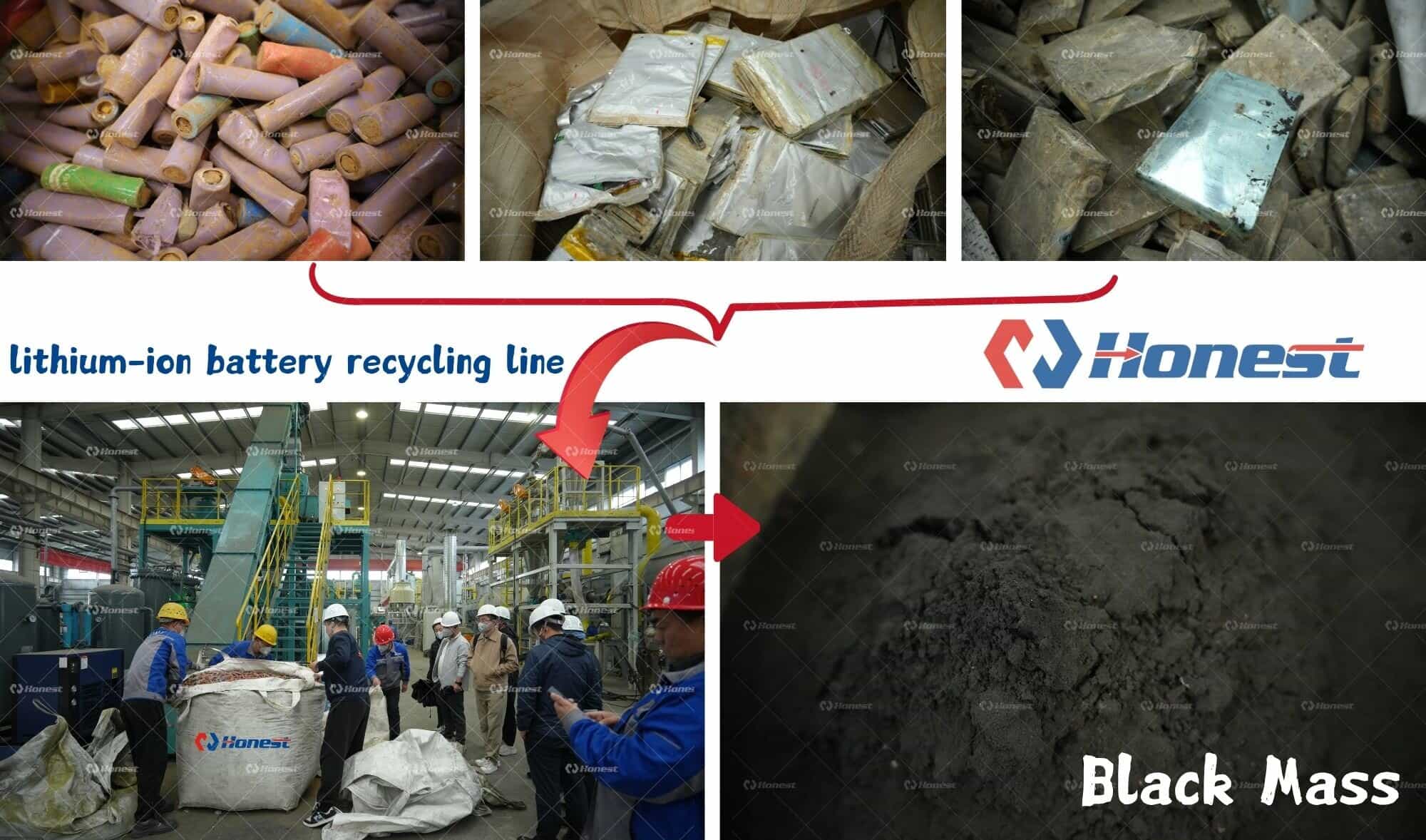
Black mass is the central target of lithium battery recycling. It is not simply waste, but a high-value mixture containing lithium, nickel, cobalt, manganese, and graphite. This material serves as the foundation for further hydrometallurgical or chemical refining processes, where critical metals can be re-extracted and reintroduced into the battery supply chain.
A well-designed lithium-ion battery recycling line can handle a wide range of battery types, including cylindrical cells like 18650, prismatic batteries used in EVs, and pouch-type lithium polymer batteries from consumer electronics. For example, several commercial recycling plants have successfully processed modules from decommissioned EV battery packs, demonstrating the equipment’s versatility. It is also applicable across different waste streams, from small devices such as phones and laptops to large-format power batteries. This flexibility is especially important as the global battery landscape continues to diversify.
Ultimately, lithium-ion battery recycling is not just about waste management—it is about resource recovery and sustainability. By efficiently separating materials and maximizing black mass purity, advanced recycling systems help reduce dependence on raw mining, lower environmental impact, and support the transition toward a circular energy economy. As battery usage accelerates worldwide, the role of reliable, high-efficiency recycling technology will only become more critical.
👉 Contact Tel: +86 199 0388 6476
👉 Contact Email: hnhonest.zack@gmail.com
Related News
- Henan Honest 2026 National Day Holiday Schedule
- Copper Wire Granulator Uses Crushing and Gravity Separation
- Double Shaft Shredder Processes Mixed Plastic Waste
- Laminated Glass Recycling Line Key Technical Considerations
- Automotive Windshield Recycling How Glass and PVB Are Separated
- How Is Automotive Scrap Recycled? A Practical Guide

Have this news-related demand?
We can help you!
Get in Touch
Connect with us anytime! Whether you have questions, need project assistance, or seek general help, our dedicated team is ready to assist. Fill out the form, and we'll promptly prioritize your satisfaction. We eagerly anticipate serving you.
If you have any requirement or suggestion, please fill in the form and send to us, thanks!
Email: hnhonest.zack@gmail.com
WhatsApp: +86 19903886476
Address: No. 403, South Of Floor 4, No. 172, Fifth Street, Zhengzhou Economic And Technological Development Zone Zhengzhou Henan China
HONEST - Experts in Waste Recycling Solutions
40000
m²
Equipment R&D Factory
2500+
Cases
Customers Worldwide
150+
Countries
Over 20 years manufacturing and 14 years export


