

Cable Granulator Machine for Aluminum or Copper Wire Recycling
Single cable recycling machines designed to process both copper and aluminum wires are increasingly preferred in the industry. This trend allows operators to quickly adapt to varying feedstock supplies and maintain steady daily output. For facilities handling mixed cable scrap, such flexibility boosts machine utilization and cuts idle production time.
Operating a cable recycling machine able to process both copper or aluminum wires delivers strategic advantages to recyclers. While copper cables have high market value, aluminum cables are generally more abundant in utility, construction, and industrial scrap streams. By handling both, facilities avoid reliance on a single raw material and ensure smooth production when copper supplies fluctuate. As a result, this dual capability can fill capacity more consistently and shorten equipment payback periods.
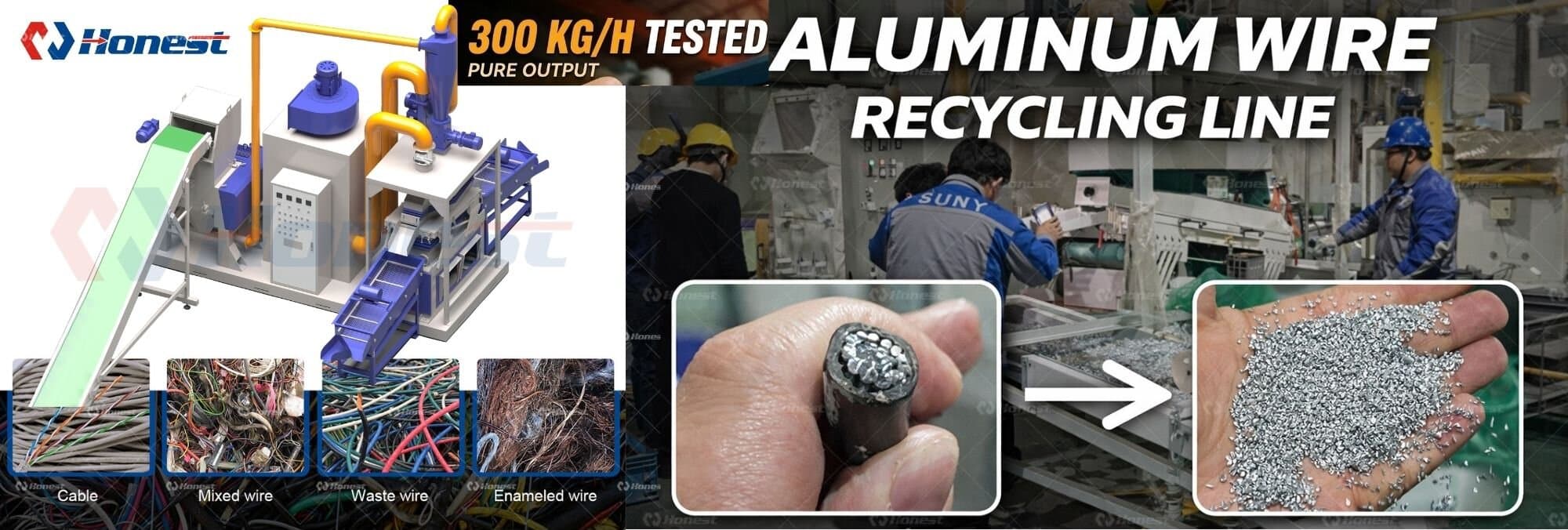 Cable Granulator Machine for Aluminum or Copper Wire Recycling
From a technical perspective, modern cable granulator systems now achieve separation rates above 99%, allowing nearly complete recovery of metal from plastic insulation. This level of performance has a direct financial impact: cleaner metal output means higher resale value and less material loss. When machine parameters are properly adjusted, both copper and aluminum granules can achieve approximately 99% purity, often meeting commercial-grade requirements without the need for additional refining. For recyclers, separation efficiency is no longer just a laboratory figure—it directly determines recoverable revenue per ton.
Material characteristics also influence long-term operating economics. Aluminum’s lower density means hourly weight output may appear lower under the same machine capacity, even though volumetric throughput remains similar. However, aluminum is softer than copper, placing less stress on cutting blades and reducing wear during continuous production. In real operating environments, this often extends blade service life, lowers maintenance frequency, and reduces downtime costs. While aluminum generates less revenue per ton—typically trading at around 60–70% of the copper price—it contributes to lower operating costs and helps maintain stable line utilization over time.
A typical industrial case demonstrates this balance clearly: a 300 kg/h cable recycling machine processing mixed aluminum cables can produce clean aluminum granules with efficient plastic separation, supporting several tons of daily throughput for small and medium-sized recycling plants. In a complete aluminum wire granulator line, cable scrap is first shredded, then separated through airflow and density-based sorting, followed by screening to improve purity. For recyclers entering competitive markets, the value of such a system is not only in metal recovery but in reducing raw material risk, expanding acceptable feedstock, and reaching stable profitability faster.
👉 Contact Tel: +86 199 0388 6476
👉 Contact Email: hnhonest.zack@gmail.com
Related News
- How PCB Dismantling Machines Improve Copper Recovery in Recycling
- Cable Granulator Machine for Aluminum or Copper Wire Recycling
- PCB Recycling Value Explained: Where Copper, Gold and Tin Are Located in Waste Circuit Boards
- Why Dual-Shaft Shredders Remain the First Choice for PCB Recycling Pretreatment
- How Solar Panel Recycling Recovers Copper, Silicon and Glass from PV Waste
- How PCB & CCL Recycling Lines Achieve 99% Copper Recovery

Have this news-related demand?
We can help you!
Get in Touch
Connect with us anytime! Whether you have questions, need project assistance, or seek general help, our dedicated team is ready to assist. Fill out the form, and we'll promptly prioritize your satisfaction. We eagerly anticipate serving you.
If you have any requirement or suggestion, please fill in the form and send to us, thanks!
Email: hnhonest.zack@gmail.com
WhatsApp: +86 19903886476
HONEST - Experts in Waste Recycling Solutions
40000
m²
Equipment R&D Factory
2500+
Cases
Customers Worldwide
150+
Countries
Over 20 years manufacturing and 14 years export


