

Lithium-ion Battery Black Mass Recovery and Market Value
Black mass value in lithium-ion battery recycling varies widely because it is not a commodity. Its price is determined by chemistry, purity, physical stability, and how well it fits a buyer’s refining process. Refiners, cathode material manufacturers, and professional traders only pay premiums for material that meets strict technical and commercial standards, while anything that increases cost or risk is quickly discounted or rejected.
Metal composition is the primary price driver. The economic value comes from lithium, nickel, cobalt, and manganese, with cobalt- and nickel-rich black mass commanding the highest prices. Material derived from NMC, NCA, and LCO batteries is generally preferred over LFP due to higher recoverable value and more established refining routes. Buyers also favor stable and predictable chemistry, as mixed or poorly sorted feedstock introduces uncertainty and processing penalties.
Purity often matters more than total metal content. Low copper and aluminum contamination is critical because excess Cu or Al increases acid consumption, reduces recovery efficiency, and can undermine the economics of hydrometallurgy. Premium buyers typically require Cu and Al below 1–2%, minimal plastics and binder residue, and controlled moisture levels. A wet, black mass, especially one with electrolyte residue, presents fire and HF risks and is frequently rejected outright.
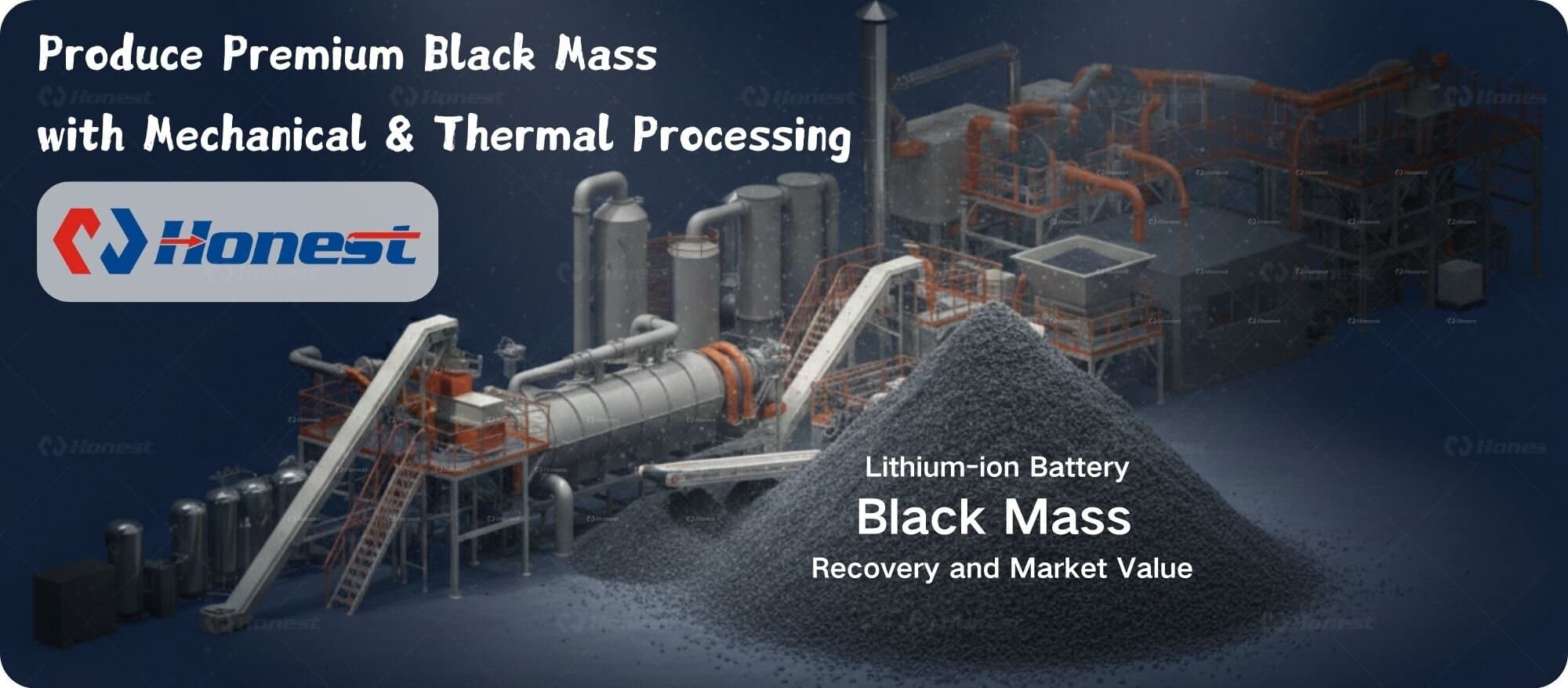 Produce Premium Black Mass with Mechanical & Thermal Processing
Physical quality further affects acceptance. Buyers prefer finely milled black mass with consistent particle size distribution, usually below 1 mm and often in the 20–200 micron range. Uniform particles improve leaching efficiency, process stability, and transport safety. In contrast, material containing large chunks mixed with fine dust is difficult to handle and process, leading to lower prices or rejection.
In practice, these factors explain why trading prices vary so widely. Even when the theoretical metal value of NMC black mass is high, impurity penalties and processing margins can significantly reduce its market price. The key takeaway from this decision is clear: the value of black mass is engineered. Recycling plants that control chemistry, impurities, moisture, and particle size consistently achieve higher prices, stronger buyer acceptance, and more stable long-term margins.
👉 Contact Tel: +86 199 0388 6476
👉 Contact Email: hnhonest.zack@gmail.com
Related News
- Lithium-ion Battery Black Mass Recovery and Market Value
- How to Build a Profitable Lithium-Ion Battery Recycling Plant
- Solar Panel Recycling Is Becoming a Strategic Resource Industry
- Chinese New Year Holiday Schedule and Production Planning Notice
- Why Shredded Paper Is Replacing Plastic Fillers
- Can Copper and Aluminum Be Separated from Mixed PCB Metal Powder?

Have this news-related demand?
We can help you!
Get in Touch
Connect with us anytime! Whether you have questions, need project assistance, or seek general help, our dedicated team is ready to assist. Fill out the form, and we'll promptly prioritize your satisfaction. We eagerly anticipate serving you.
If you have any requirement or suggestion, please fill in the form and send to us, thanks!
Email: hnhonest.zack@gmail.com
WhatsApp: +86 19903886476
HONEST - Experts in Waste Recycling Solutions
40000
m²
Equipment R&D Factory
2500+
Cases
Customers Worldwide
150+
Countries
Over 20 years manufacturing and 14 years export


